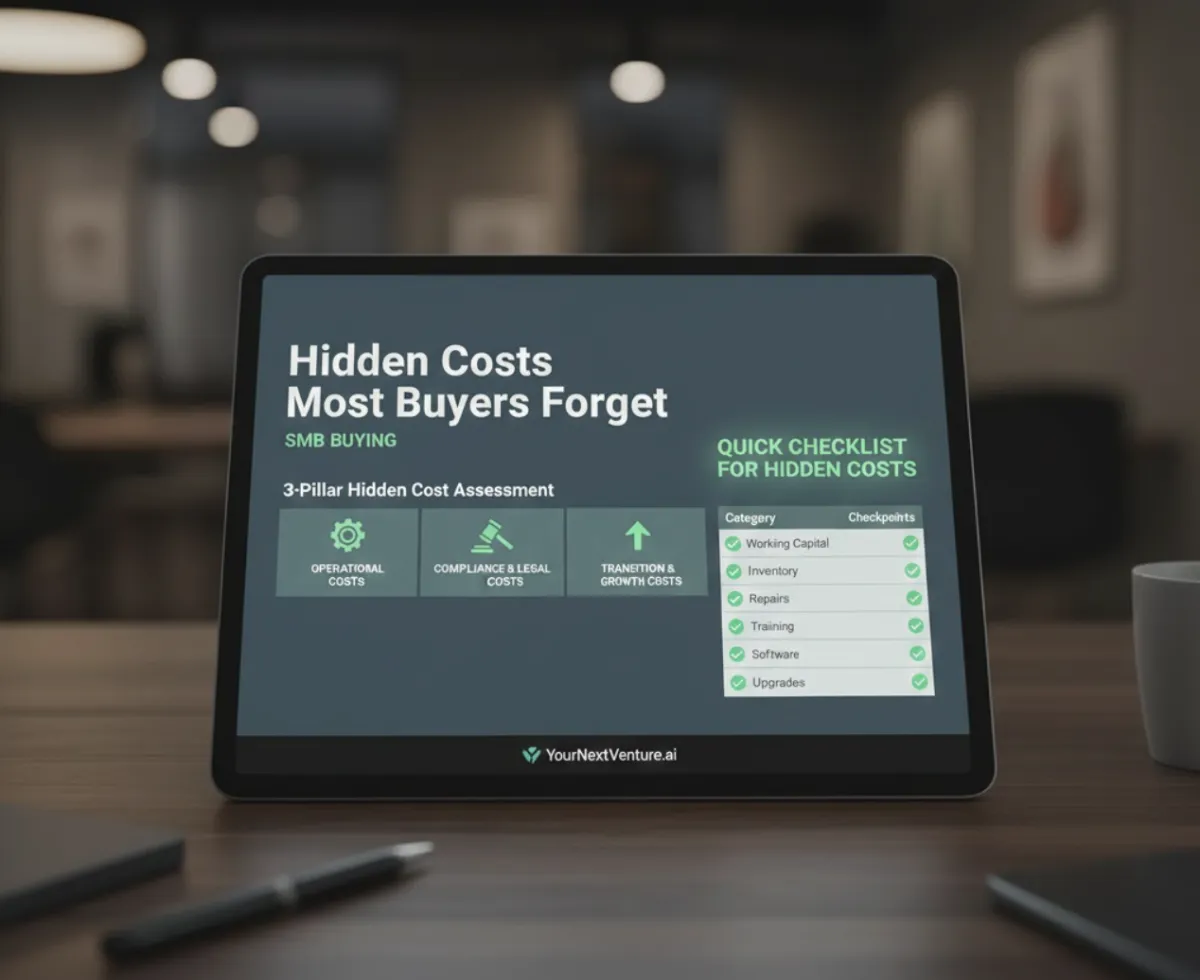
What Are the Hidden Costs Most Buyers Forget?
Buying a small business can feel like a straightforward transaction on paper. You see the revenue, the profit, and perhaps even the shiny assets. But many buyers overlook the hidden costs that can quietly erode returns and disrupt cash flow after the deal closes. Understanding these hidden costs upfront is essential for any buyer serious about operational success and long-term growth.
A Framework for Identifying Hidden Costs
To navigate the hidden costs of buying a small business, use the 3-Pillar Hidden Cost Assessment framework:
Operational Costs – day-to-day expenses that keep the business running.
Compliance & Legal Costs – fees related to regulation, licensing, and contracts.
Transition & Growth Costs – investments needed to maintain or scale operations.
This framework ensures buyers systematically evaluate each area instead of relying on assumptions.
Common Hidden Costs to Watch For
1. Working Capital Needs
Many buyers underestimate the cash required to cover payroll, supplier payments, and seasonal fluctuations. Ensure you calculate a realistic buffer beyond the purchase price.
2. Inventory & Equipment
Old inventory may lose value, and outdated equipment can require urgent repairs or replacement.
3. Repairs and Maintenance
Facilities, vehicles, or machinery often carry hidden maintenance costs. Inspect assets and consider deferred upkeep.
4. Training and Staffing
Employee onboarding, cross-training, or retention incentives can add unexpected costs.
5. Software and Technology
Subscriptions, updates, or new systems may be necessary for smooth operations.
6. Compliance and Legal Fees
Licenses, permits, insurance, or ongoing legal advice are often overlooked during valuation.
7. Upgrades & Growth Investments
Scaling the business may require remodeling, marketing, or operational improvements.
Quick Checklist for Hidden Costs
Category Example Costs Checkpoints Working Capital Payroll, utilities Review monthly cash flow Inventory Obsolete stock Audit inventory value Repairs Machinery, facilities Inspect equipment condition Training Onboarding, retention Identify key staff training needs Software Subscriptions, licenses List all current and required tools Compliance Permits, insurance Verify regulatory obligations Upgrades Marketing, renovations Assess growth initiatives needed
Real-World Example: What to Avoid
A buyer once purchased a small service business based solely on revenue multiples. Within six months, unexpected equipment repairs and software upgrades absorbed 15% of net profit, dramatically reducing ROI. Conducting a hidden cost assessment upfront could have highlighted these risks.
FAQ
Q1: Why do hidden costs matter in SMB buying?
Hidden costs directly affect cash flow and profitability, making some deals less attractive than they appear.
Q2: How can I estimate working capital needs?
Review historical cash flow, seasonal fluctuations, and vendor terms to calculate a realistic buffer.
Q3: Are legal and compliance fees really that high?
They can be, depending on industry regulations, licenses, and contracts, so always budget conservatively.
Q4: How do I avoid surprise expenses after closing?
Perform thorough due diligence using a checklist like the one above and tools like YourNextVenture.ai’s Due Diligence Checklist.
Q5: Can technology upgrades be considered hidden costs?
Yes, especially if the business relies on outdated software or systems that need immediate investment.
Conclusion
Ready to uncover all hidden costs and make smarter acquisition decisions? Explore YourNextVenture.ai’s assessments to ensure your next deal is profitable from day one.


