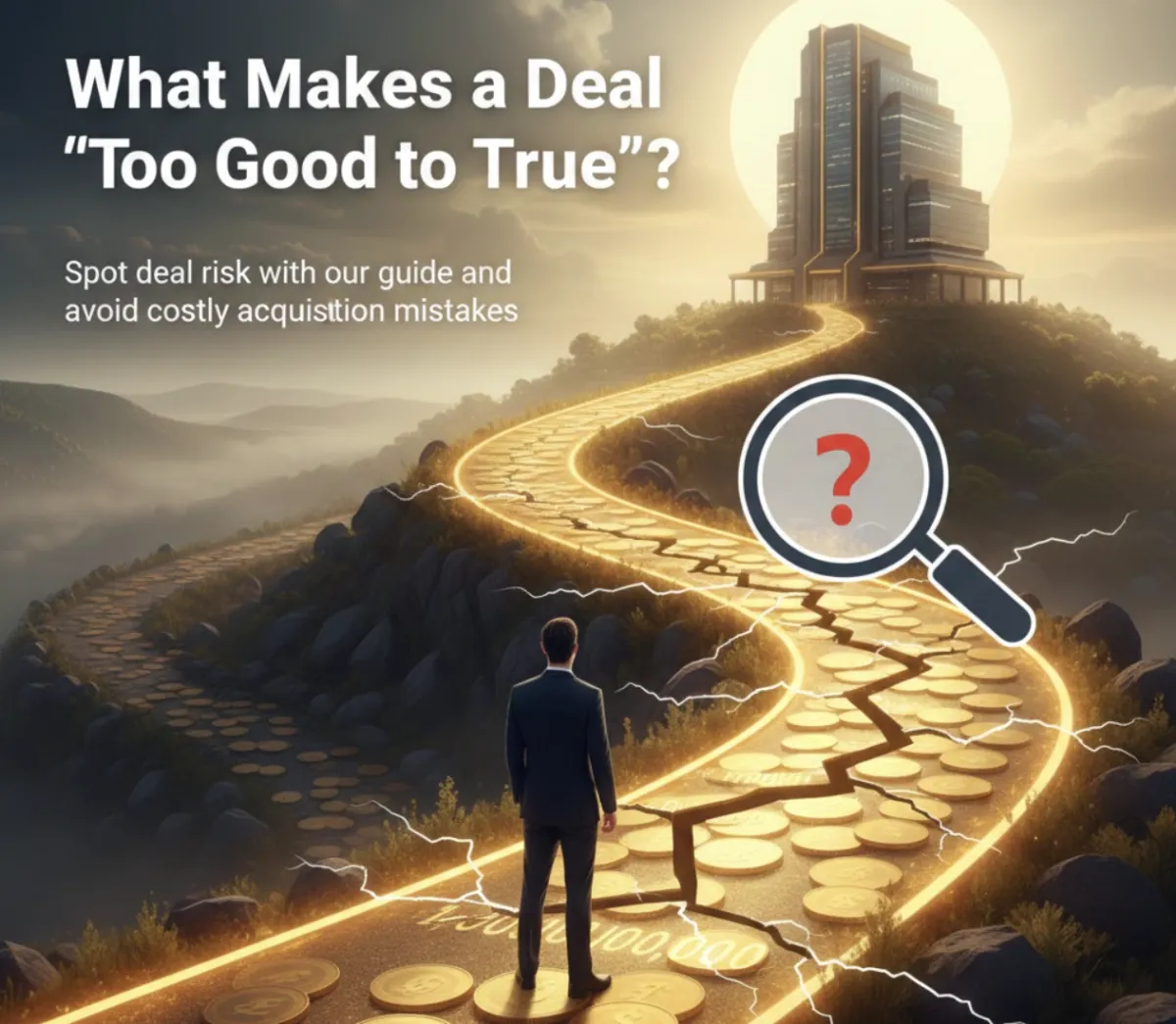
What Makes a Deal “Too Good to Be True”?
Purchasing a business can be exhilarating—but some deals may seem too good to be true. When the price looks perfect, numbers appear flawless, and the seller insists on a quick close, it’s time to pause. Understanding the warning signs of risky deals is essential for every buyer.
Recognizing "Too Good to Be True" Signals
Acquisitions that seem flawless often hide challenges. Here are common scam signals and risk indicators:
Unrealistic Pricing: Offers far below market norms may signal undisclosed issues.
Perfect Numbers: Financials that are too clean, with no seasonality or minor fluctuations, can indicate manipulation.
Zero Issues Claimed: Sellers who claim everything is problem-free often overlook or hide real operational challenges.
Seller Pushiness: Urgency tactics, insisting on a quick close, may be a red flag for undisclosed liabilities.
Deal Readiness Framework for Smarter Decisions
Use a structured approach to evaluate any acquisition:
1. Financial Quality Check
Review historical P&Ls for consistency.
Verify add-backs and one-time expenses.
Analyze cash flow patterns and margins.
2. Operational Transparency
Assess customer retention and supplier stability.
Examine employee dependency and key-person risks.
Check for systems, SOPs, and documented processes.
3. Risk Assessment
Identify hidden liabilities (legal, tax, compliance).
Evaluate transition complexity and owner dependency.
Benchmark against industry norms.
Real-World Example
A buyer once pursued a service business priced 40% below industry multiples. Initial P&L review showed flawless margins and high retention. During due diligence, they discovered undisclosed major customer churn and unrecorded liabilities. The deal fell apart, saving the buyer from a significant loss.
Quick-Check Checklist for Buyers
Signal Action Unrealistic price Compare with industry multiples; request explanations Perfect financials Investigate add-backs and one-time adjustments Seller pushiness Slow the process; request full due diligence No reported issues Conduct operational interviews and site visits Hidden liabilities Engage accountants and legal experts
FAQ
1. What does "too good to be true" mean in business buying?
It refers to deals that appear perfect but may hide operational, financial, or legal issues.
2. How can I spot risk early?
Review financials, verify claims, interview staff/customers, and benchmark against industry norms.
3. Are quick-close sellers always risky?
Not always, but urgency should trigger extra scrutiny.
4. Should I trust flawless financial statements?
No—validate add-backs, seasonality, and unusual adjustments.
5. How does YourNextVenture.ai help?
Tools like the Due Diligence Checklist guide buyers in evaluating financial, operational, and transition risks.
6. Can I avoid "too good to be true" deals entirely?
While no deal is risk-free, structured diligence, realistic benchmarks, and a cautious approach significantly reduce exposure.


